
Immediate safety priorities
Keep away from standing water near electrical equipment, unstable ceilings or floors, and water that may be contaminated. Follow local emergency instructions. Do not approach a wet electrical panel, outlet or appliance to switch it off.
Your first description to a provider can be simple: where you noticed water, when you noticed it, whether it appears to be spreading and any hazards you can see from safety. You do not need to diagnose the problem before asking for help.
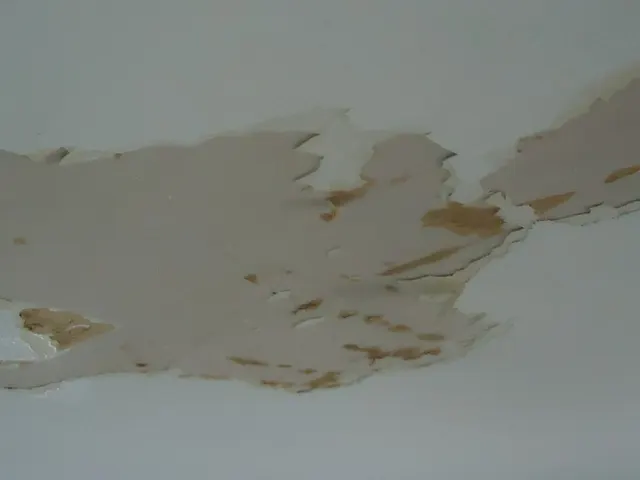
Peeling paint and affected ceiling material.
Stopping further water inflow
Stopping a leak and assessing wet materials are different tasks. Ask who should investigate the source and whether a plumber, roofer, HVAC contractor or another specialist is needed. Do not reach through unsafe areas to find a valve or equipment.
Tell each provider about the work another provider is doing. Ask who coordinates access and what happens if water continues to enter. A clear division of responsibilities helps avoid paying for one stage while an unresolved source keeps wetting the property.
Documenting visible damage and inventory
When safe, take wide photographs that show the room and closer photographs of visible changes. Record the discovery time, affected rooms and any changes you observe. Avoid entering a hazardous space solely to collect evidence.
Keep receipts, estimates and messages together. Before discarding items, ask the provider and insurer, where relevant, what records or inspection they need. Do not retain unsafe material merely for documentation; seek guidance about handling it.
Practical scenario: washing machine hose failure
Imagine a washing machine hose leaks upstairs and a mark appears on the kitchen ceiling below. A stopped leak would not, by itself, answer whether the ceiling or concealed materials remain wet.
In this hypothetical example, useful questions are who repairs the source, who assesses the affected materials and whether either space is safe to use. Stay clear of sagging material and electrical hazards instead of opening the ceiling yourself.
Pre-assessment preparation checklist
Prepare information you already have rather than entering the affected area to gather more. A room list, source description and photographs taken safely help explain the problem.
Tell the provider about stairs, access restrictions, occupied rooms and building-management requirements. Ask which arrangements are necessary for the assessment and which can wait until a scope is agreed.
| Prepare | Why it helps | Boundary |
|---|---|---|
| Discovery time and rooms | Explains the initial situation | Use what you already know |
| Photos taken safely | Shows visible changes | Never enter a hazard for a photo |
| Source and repair information | Clarifies responsibilities | Do not diagnose electrical or structural risks |
| Written scope and changes | Records what is authorized | Confirm exclusions directly |
Questions to ask independent contractors
Ask what the first visit includes and what further investigation might be needed. Request an explanation of removal, drying, monitoring and repairs as separate parts of the work.
Clarify when you will receive an estimate, what authorizes additional work and who will update you. Ask about relevant qualifications and insurance, and confirm any insurance claim requirements directly with your insurer.
Site disclaimer
This guide helps prepare questions; it does not assess the safety or condition of a particular property. Orlando Water Restoration Pros does not perform restoration or arrange service.
Use current official safety guidance alongside advice from the appropriate professionals for your situation. Keep unresolved source, moisture and repair questions visible until someone responsible has explained the next step.